



Aurora C
Aurora kinase C (AURKC) is a serine/threonine kinase that functions predominantly in germ cells and plays a central role in meiotic chromosome segregation, spindle organization, and faithful progression through meiosis I and meiosis II[1]. AURKC acts as a component of the chromosomal passenger complex (CPC) through association with inner centromere protein (INCENP) and related CPC proteins, thereby regulating chromosome dynamics during cell division[2][3]. Mechanistically, CPC-associated Aurora kinases coordinate chromosome alignment, kinetochore function, and cytokinetic events that are required for accurate chromosome inheritance[4][5]. In meiotic systems, accumulating evidence indicates that AURKC possesses functions that are distinct from those of Aurora kinase B (AURKB), contributing to specialized regulation of chromosome behavior in oocytes and spermatocytes[1][6]. This functional specialization is particularly important because chromosome segregation errors during meiosis can lead to aneuploidy and reproductive defects[1]. In disease-relevant settings, mutations in AURKC have been linked to abnormal spermatogenesis and male infertility, highlighting the biological significance of AURKC-dependent meiotic regulation[1]. Compared with the related isoforms AURKA and AURKB, AURKC exhibits predominant germ-cell expression and participates preferentially in meiotic CPC functions rather than the canonical mitotic roles associated with AURKA or AURKB[1][6]. For experimental applications, AURKC is frequently investigated through genetic depletion, mutation analysis, and CPC-based mechanistic studies to define kinase-dependent control of chromosome segregation and cytokinesis[1][2][3].
References:
- [1]. Quartuccio SM, et al. Functions of Aurora kinase C in meiosis and cancer. Front Cell Dev Biol. 2015 Aug 20;3:50. [Content Brief]
- [2]. Sasai K, et al. Aurora-C kinase is a novel chromosomal passenger protein that can complement Aurora-B kinase function in mitotic cells. Cell Motil Cytoskeleton. 2004 Dec;59(4):249-63. [Content Brief]
- [3]. Yang KT, et al. Aurora-C kinase deficiency causes cytokinesis failure in meiosis I and production of large polyploid oocytes in mice. Mol Biol Cell. 2010 Jul 15;21(14):2371-83. [Content Brief]
- [4]. Vader G, et al. The chromosomal passenger complex: guiding Aurora-B through mitosis. J Cell Biol. 2006 Jun 19;173(6):833-7. [Content Brief]
- [5]. Hengeveld RCC, et al. Inner centromere localization of the CPC maintains centromere cohesion and allows mitotic checkpoint silencing. Nat Commun. 2017;8:15542.
- [6]. Nguyen AL, et al. Genetic Interactions between the Aurora Kinases Reveal New Requirements for AURKB and AURKC during Oocyte Meiosis. Curr Biol. 2018;28(21):3458-3468.e1-e5.
All Product Categories
-
Aurora C Related Products (16)
Related Products (16)

- 1
-
Reversine
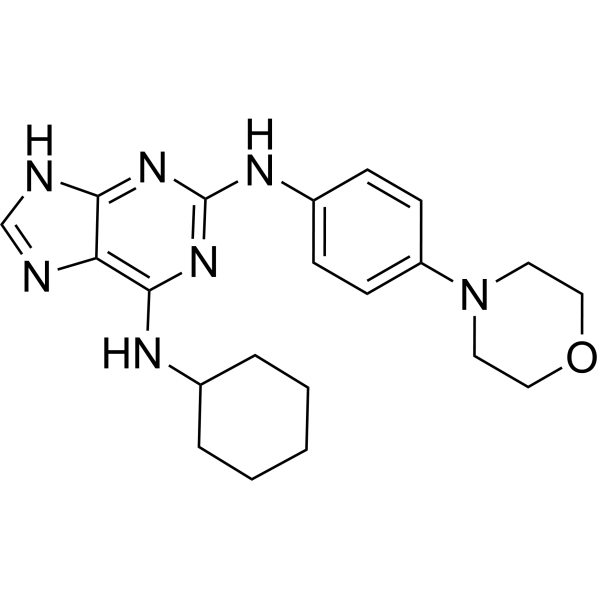 0 ImagesReversine is a novel class of ATP-competitive Aurora kinase inhibitor with IC50s of 400, 500 and 400 nM for Aurora A, Aurora B and Aurora C, respectively.
-
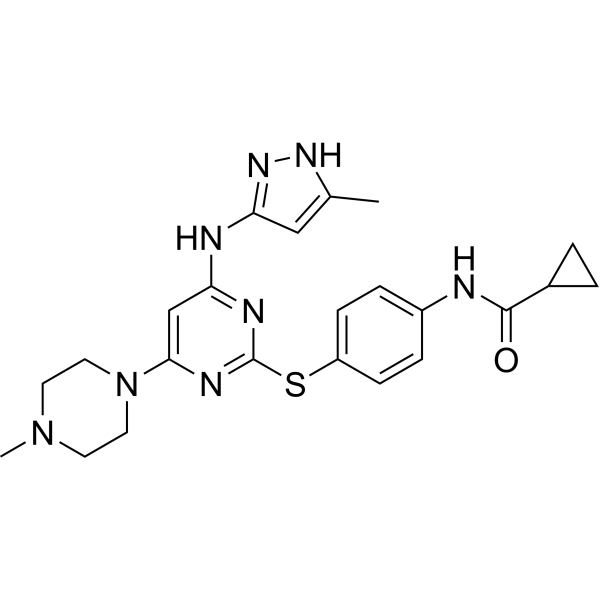
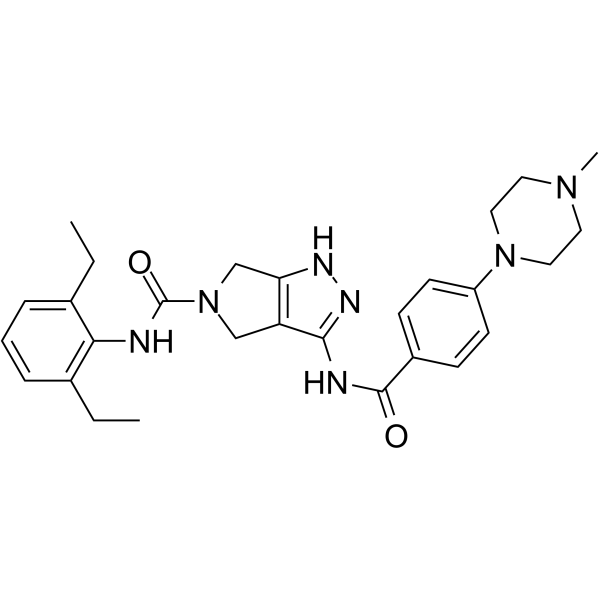
Danusertib
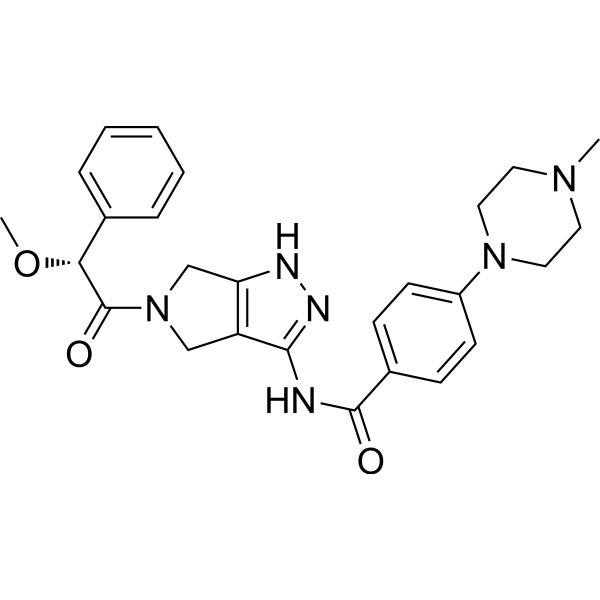 0 ImagesSynonyms: PHA-739358Danusertib is a pyrrolo-pyrazole and aurora kinase inhibitor with IC50 of 13, 79, and 61 nM for Aurora A, B, and C, respectively.
-
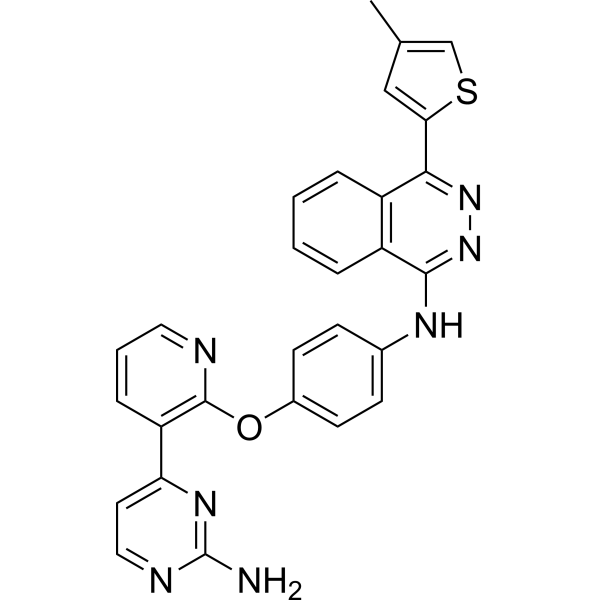
Ilorasertib
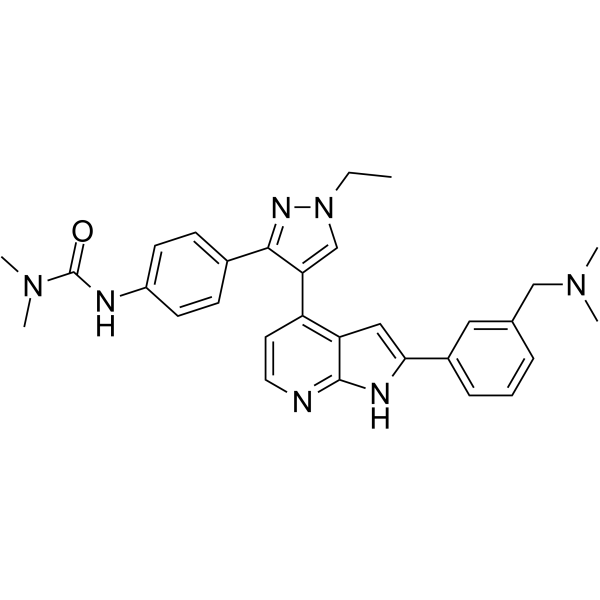
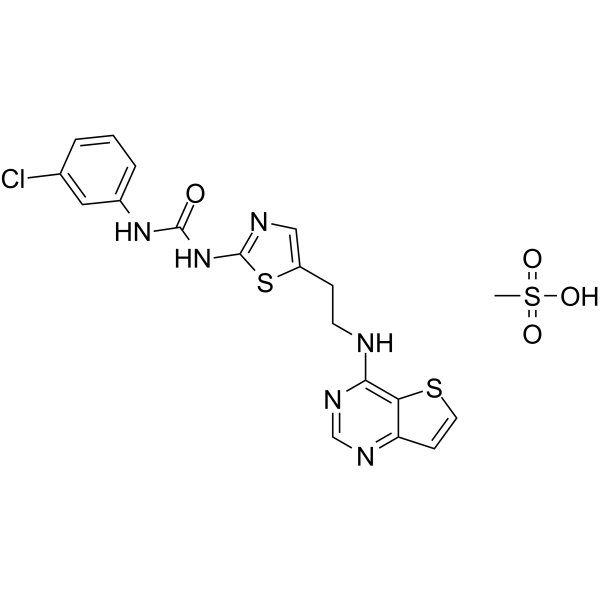
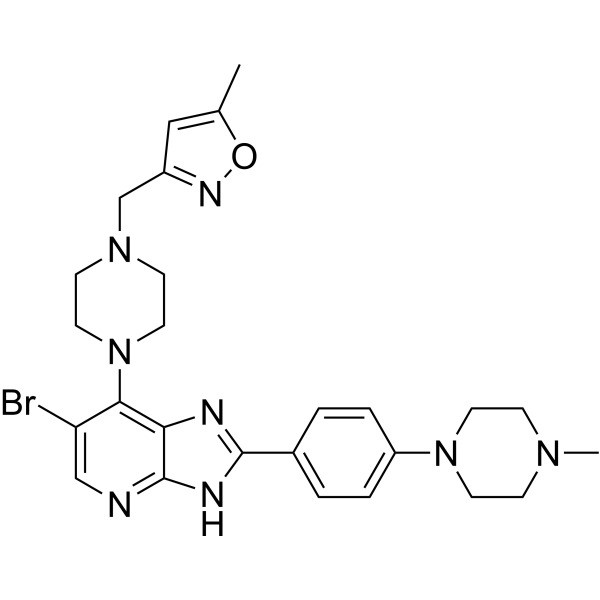
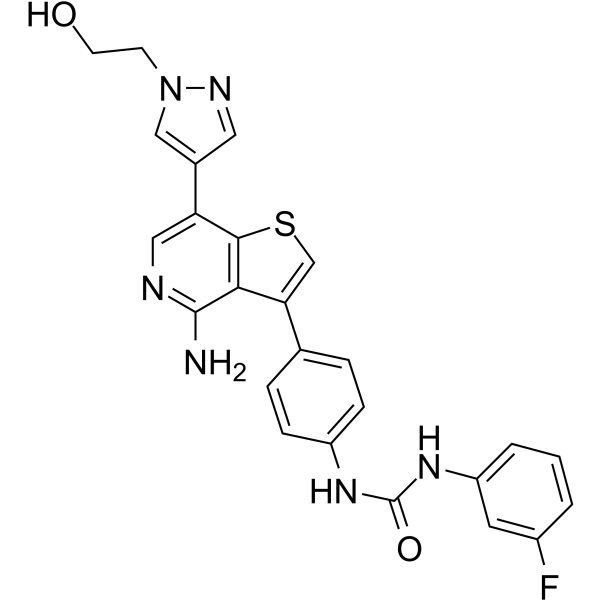 0 ImagesSynonyms: ABT-348Ilorasertib (ABT-348) is a potent, orally active and ATP-competitive aurora inhibitor with IC50s of116, 5, 1 nM for aurora A, aurora B, aurora C, respectively. Ilorasertib also is a potent VEGF, PDGF inhibitor. Ilorasertib has the potential for the research of acute myeloid leukemia (AML) and myelodysplastic syndrome (MDS).
-
BI-847325
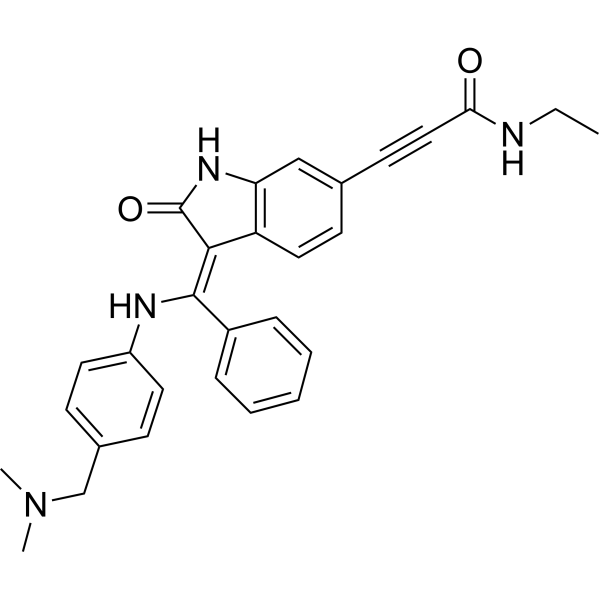 0 ImagesBI-847325 is an ATP competitive dual inhibitor of MEK and aurora kinases (AK) with IC50 values of 4 and 15 nM for human MEK2 and AK-C, respectively. BI-847325 is a click chemistry reagent, it contains an Alkyne group and can undergo copper-catalyzed azide-alkyne cycloaddition (CuAAc) with molecules containing Azide groups.
-
Ilorasertib hydrochloride
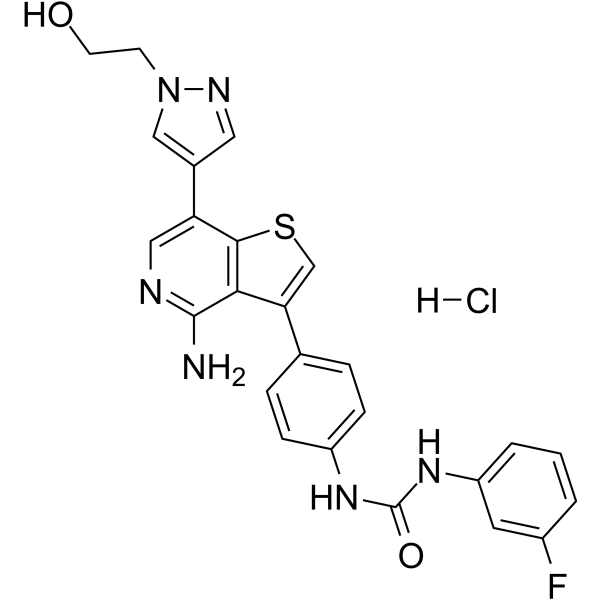 0 ImagesSynonyms: ABT-348 hydrochlorideIlorasertib (ABT-348) hydrochloride is a potent, orally active and ATP-competitive aurora inhibitor with IC50s of116, 5, 1 nM for aurora A, aurora B, aurora C, respectively. Ilorasertib hydrochloride also is a potent VEGF, PDGF inhibitor. Ilorasertib hydrochloride has the potential for the research of acute myeloid leukemia (AML) and myelodysplastic syndrome (MDS).
-
CCT400028
 0 ImagesCat. No.: HY-181311Purity: 98.03%CCT400028 is a PROTACs-class degrader that targets the Aurora A (AURKA) kinase. CCT400028 induces ubiquitination and proteasomal degradation of target proteins by recruiting the cereblon (CRBN) E3 ubiquitin ligase. The KD values of CCT400028 against the three subtypes of human AURKA are 71 nM, 2100 nM and >10000 nM, respectively, and its IC50 against human CRBN is 6300 nM. CCT400028 is applicable to relevant research on leukemia, neuroblastoma and glioma.
-
SNS-314
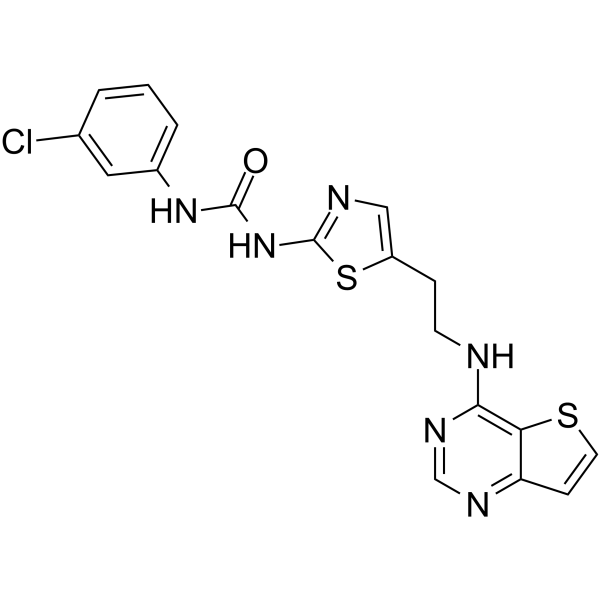 0 ImagesCat. No.: HY-108344CAS No.: 1057249-41-8SNS-314 is a potent and selective aurora kinase inhibitor with IC50s of 9, 31, and 6 nM for aurora A, B and C, respectively.
-
XMD-12
 0 ImagesXMD-12 (compound 1) is an Aurora kinase (Aurora Kinase) inhibitor with anti-tumor activity that promotes paclitaxel (HY-B0015) induced cell death. XMD-12 exhibits high selectivity and potency against Aurora A, B, and C kinases, with IC50 values of 5.6, 18.4, and 24.6 nM, respectively.
-
BRD-7880
 0 ImagesCat. No.: HY-123610CAS No.: 1456542-69-0BRD-7880 is a potent and highly specific inhibitor of Aurora Kinase B (AURKB) and Aurora Kinase C (AURKC), with IC50 values of 7 nM and 12 nM, respectively.
- 1



